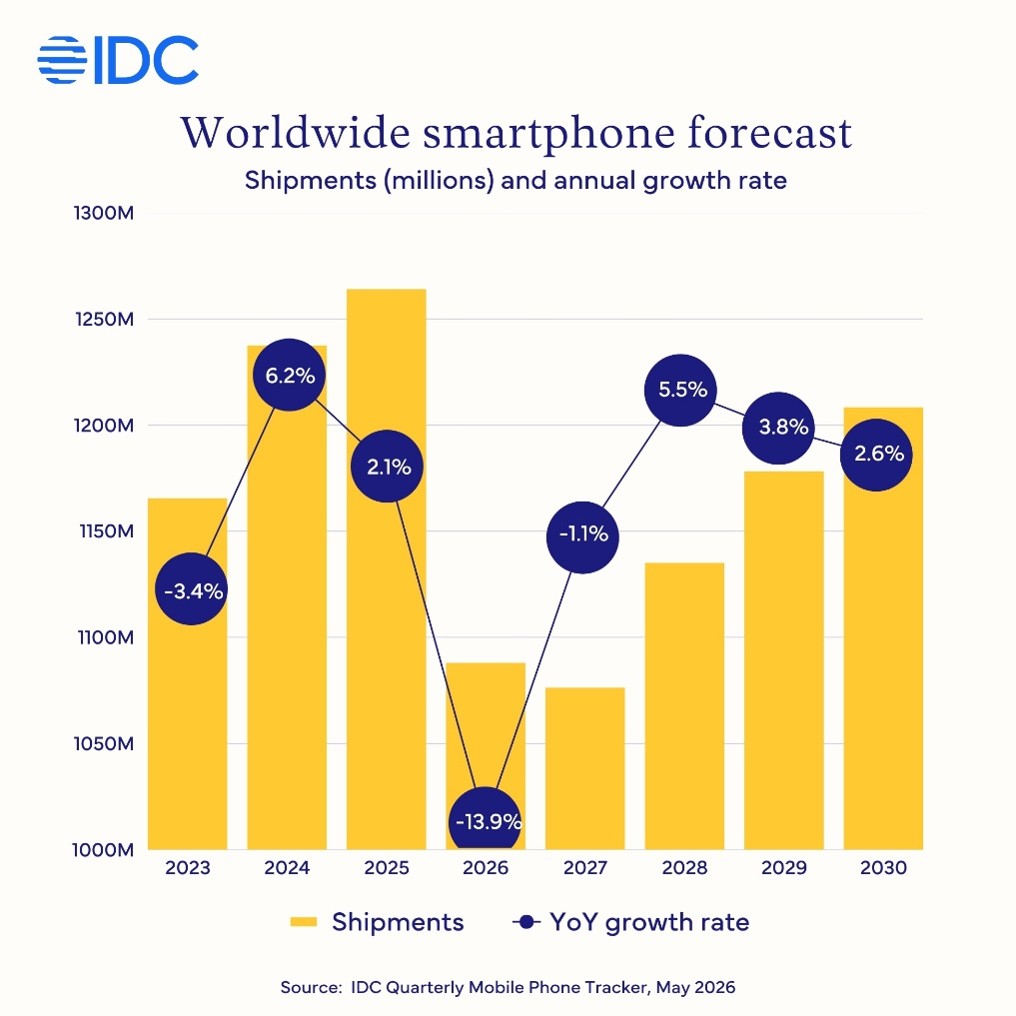
The smartphone industry is entering a slower cycle. After years of fast upgrades and strong replacement demand, 2026 is expected to be a more cautious year for global smartphone sales. According to IDC’s 2026 smartphone market forecast, worldwide smartphone shipments are forecast to decline 13.9% year over year in 2026, reaching about 1.09 billion units.
At first glance, that may sound like bad news for the phone case market. If fewer people buy new phones, shouldn’t fewer people buy new phone cases?
Not exactly.
The phone case market is no longer driven only by new smartphone launches. Today, it is supported by a much wider demand structure: device protection, replacement purchases, personalization, fashion trends, functional upgrades, retail merchandising, and private label product development.
Consumers may keep their phones longer, but they still want to protect them, refresh their look, and make daily phone use easier. For brands, retailers, distributors, and sourcing teams, that means the phone case category still has room to grow in 2026 — but the opportunity is becoming more selective.
Phone Case Market Size in 2026
Before looking at consumer behavior, it is important to understand the market numbers.
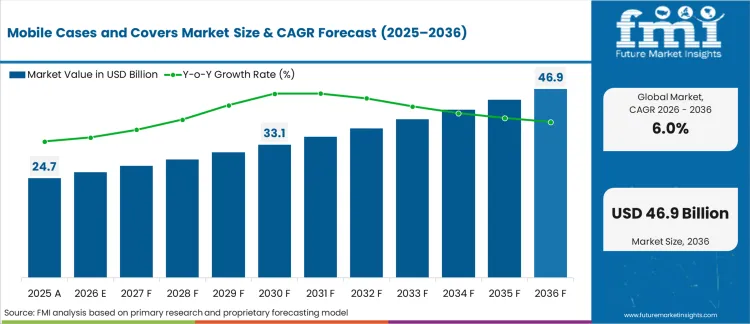
According to Future Market Insights’ mobile cases and covers market report, the global mobile cases and covers market was valued at USD 24.7 billion in 2025 and is expected to reach USD 26.18 billion in 2026. The same report projects the market to reach USD 47.0 billion by 2036, growing at a 6.0% CAGR during the forecast period.
A separate forecast from Technavio’s phone case market analysis estimates that the phone case market will grow by USD 17.79 billion during 2026–2030, expanding at a CAGR of 7.5%. The report also points to rising smartphone costs and device fragility as key drivers of demand.
These numbers show an important contrast. The smartphone market may be slowing, but the phone case market is still expected to expand. That is because cases are not just tied to new device purchases. They are part of a larger accessory ecosystem built around protection, style, replacement, and function.
The broader protective accessories category also supports this view. Grand View Research’s mobile phone protective covers market report estimates that the global mobile phone protective covers market was valued at USD 25.51 billion in 2024 and is expected to reach USD 53.33 billion by 2033, growing at a CAGR of 8.6% from 2025 to 2033.
Different market reports may use different definitions. Some focus only on protective cases, while others include broader mobile accessories. But the direction is consistent: phone cases remain one of the most important and resilient product segments within the mobile accessories market.
Why a Slower Smartphone Market Does Not Stop Case Demand
Smartphone shipments matter, but they are not the only factor behind phone case demand.
The larger opportunity comes from the installed base — the millions of consumers who already own smartphones and continue buying accessories throughout the life of their devices. A person may keep the same iPhone or Samsung phone for three or four years, but during that period, they may buy more than one case.
Some replace a clear case that has turned yellow. Some buy a stronger case after dropping their phone. Others switch cases for work, travel, fashion, seasons, holidays, or different daily-use needs.
That makes a phone case different from a smartphone. A phone is a major purchase. A case is a smaller, repeatable purchase.
For brands and retailers, this is an important point. Growth does not have to come only from the latest iPhone or Samsung Galaxy launch. It can also come from long-tail models, replacement demand, retail-ready collections, private label products, and lifestyle-based case lines.
A slower smartphone upgrade cycle may even extend the sales window for cases designed for popular existing models. If consumers hold onto their devices longer, they still need protection and may replace accessories more than once.
Higher Smartphone Prices Make Protection More Important
As smartphones become more expensive, consumers become more protective.
A premium phone is no longer a casual purchase. For many buyers, it is a device they expect to use every day for several years. That makes protection a practical need, not just an optional add-on.
This is one reason protective phone cases continue to perform well across both online and offline channels. Consumers want cases that help reduce everyday risk, including drops, scratches, camera damage, corner impact, and surface wear.
For brands, this means protection should still be the foundation of any serious product line. Strong design matters, but the case first needs to feel reliable in the customer’s hand.
Common high-demand protective case features include shock-absorbing corners, raised camera protection, raised screen edges, anti-yellowing clear materials, hybrid TPU + PC structures, MagSafe-compatible magnetic rings, scratch-resistant surfaces, and slim but protective designs.
For B2B buyers that want to understand how materials, molding, finishing, and quality control affect product performance, learning more about phone case manufacturing processes can help when comparing suppliers.

Personalization Keeps the Phone Case Market Active
A phone case is no longer just a protective shell. For many consumers, it is part of their personal style.
This is especially true in the U.S. market, where consumers often treat cases like fashion accessories. A minimalist clear case, a vegan leather case, a glitter case, a crossbody strap case, and a rugged outdoor case all speak to different lifestyles.
That creates more opportunities for brands. Instead of selling one basic phone case, a brand can build collections around seasonal colors, holiday gift sets, minimalist work styles, luxury textures, sports and outdoor use, influencer collaborations, retail-exclusive designs, and private label phone cases.
This is one reason the phone case market remains active even when phone upgrades slow down. Consumers may not replace their phones every year, but they still refresh the look of the device they use every day.
For retailers, this creates stronger merchandising potential. A phone case display does not need to be filled only with black, clear, and blue cases. It can include color stories, lifestyle themes, packaging sets, and limited collections that encourage repeat purchases.
For brands looking to build differentiated collections, working with a custom phone case manufacturer can make it easier to develop exclusive materials, colors, finishes, packaging, and private label designs.
Functional Cases Are Creating New Growth
Another reason the phone case market still has room to grow is product innovation. The category keeps moving beyond basic protection.
MagSafe phone cases, kickstand cases, wallet cases, crossbody strap cases, foldable phone cases, vegan leather cases, and eco-friendly cases all give consumers new reasons to buy. These are not just cosmetic changes. They add daily-use value.
MagSafe-compatible cases are a strong example. They connect the case to a larger accessory ecosystem, including magnetic chargers, car mounts, wallets, stands, and power banks. Once a consumer uses magnetic accessories, the case becomes part of a functional setup, not just a cover.
Foldable phones also create new design challenges. Hinges, screen protection, slimness, grip, and durability all require more precise case engineering. That gives manufacturers and brands more room to develop specialized products instead of competing only on price.
For brands exploring this segment, choosing a foldable phone case manufacturer with experience in hinge protection, structural fit, and material testing can reduce development risk.


E-Commerce Gives Niche Case Designs More Room to Win
Online sales have changed the phone case market. In the past, a brand needed strong retail shelf space to reach customers. Today, niche case designs can gain traction through Amazon, Shopify stores, TikTok Shop, Instagram, influencer drops, and brand-owned websites.
This matters because phone cases are visual products. Consumers can quickly compare colors, textures, materials, compatibility, and lifestyle images. A well-positioned case can sell because it looks right for a specific audience.
E-commerce also makes testing easier. Brands can launch a small collection, track conversion, read reviews, and adjust the next production run. This is especially valuable for private label brands and DTC sellers that need to move quickly.
For phone case brands, product development and content strategy should work together. The case needs the right structure, but it also needs strong visuals, clear product descriptions, packaging, and a story that makes the customer choose it over similar products.
Offline Retail Still Matters
Even with e-commerce growth, offline retail remains important. Phone cases are easy to display, easy to understand, and often bought on impulse. They work well in electronics stores, supermarkets, carrier stores, airport shops, gift shops, and department stores.
Retailers like phone cases because they are compact, high-frequency accessories. A small display can hold multiple SKUs, colors, and styles. Cases can also be bundled with screen protectors, chargers, straps, or packaging kits.
For B2B buyers, this creates a different set of requirements. A product that works online may not automatically work in retail. Retail-ready phone cases need clear packaging, accurate model labeling, barcode support, strong visual presentation, and consistent quality across batches.
This is where manufacturing support becomes important. Brands need suppliers that understand not only production, but also SKU planning, packaging, quality control, and delivery timing. For retailers and distributors, working with a phone case supplier for retail chains can help align product development with retail packaging, private label requirements, and bulk order production.
Growth Is Still Possible, But It Is More Selective
The phone case market is not easy. It is crowded, price-sensitive, and full of similar-looking products. Low-cost competition is everywhere, especially on marketplaces.
That does not mean the market is closed. It means growth is shifting toward brands that can create a clear reason to buy.
Basic cases will always exist, but stronger margins are more likely to come from better materials, better design, better function, better packaging, and better brand positioning.
For brands, this means the question is not simply, “Can we sell phone cases?”
The better question is: “What type of phone case line gives customers a reason to choose us?”
In 2026, that answer may come from anti-yellowing clear cases, MagSafe-compatible designs, rugged protection, premium textures, crossbody strap cases, foldable phone cases, sustainable materials, or retail-ready packaging.
The brands that win will be the ones that understand both the consumer side and the supply chain side of the market.
What This Means for Phone Case Brands and B2B Buyers
For brands, retailers, and sourcing teams, 2026 is not the year to chase every possible style. It is the year to build a more focused product line.
A strong phone case collection may include clear anti-yellowing cases for everyday users, magnetic cases for charging and accessory compatibility, rugged cases for protection-focused buyers, vegan leather cases for premium lifestyle positioning, crossbody strap cases for fashion and travel use, foldable phone cases for emerging device categories, and retail-ready packaging for offline channels.
The best opportunities usually come from matching product design with a clear customer group. A supermarket buyer, a DTC fashion brand, an Amazon seller, and a telecom accessory distributor may all need phone cases, but they do not need the same product strategy.
That is why supplier selection matters. A reliable OEM phone case manufacturer should help with more than production. The right partner can support material selection, mold development, sample testing, packaging, quality control, and scalable delivery.
For companies planning long-term product lines, OEM/ODM phone case solutions can help turn market trends into practical products that are ready for retail and e-commerce channels.
In a slower smartphone market, brands cannot afford unstable quality, unclear communication, or delayed launches. The market may still be growing, but buyers are becoming more selective.

Conclusion: The Phone Case Market Is Still Moving
The phone case market still has room to grow in 2026 because demand is no longer tied only to new smartphone shipments. Consumers protect expensive devices, replace worn-out cases, express personal style, and look for features that make daily phone use easier.
At the same time, brands and retailers continue to need accessories that are easy to merchandise, easy to customize, and suitable for both online and offline channels.
The market is not wide open for every low-cost product. But it is still full of opportunity for brands that understand where demand is moving: better protection, stronger design, functional upgrades, sustainable materials, private label collections, and reliable manufacturing.
For companies planning to expand in the phone case market, the next stage of growth will not come from simply adding more SKUs. It will come from building smarter product lines with the right manufacturing partner behind them.
FAQ
Is the phone case market still growing in 2026?
Yes. Although the smartphone market is expected to slow in 2026, multiple market reports still project growth for the phone case market. Demand is supported by protection, replacement purchases, personalization, and functional upgrades.
Why can the phone case market grow when smartphone sales slow down?
Phone case demand is not driven only by new phone sales. Many consumers keep the same phone for several years but still buy new cases during that period. Replacement demand, long-tail models, fashion trends, and protective needs all support the market.
What types of phone cases have strong demand in 2026?
Strong categories include MagSafe phone cases, shockproof cases, clear anti-yellowing cases, vegan leather cases, crossbody strap cases, foldable phone cases, and sustainable phone cases. Demand depends on the target customer and sales channel.
Is the phone case market too competitive for new brands?
The market is competitive, but not closed. Brands can still grow by focusing on better materials, original design, functional value, retail-ready packaging, and reliable manufacturing support.
How can brands choose a phone case manufacturer?
Brands should look for a manufacturer with OEM/ODM experience, stable quality control, material knowledge, sample development ability, packaging support, and scalable production capacity. This is especially important for brands, retailers, distributors, and private label buyers.